


Los Angeles, CA, and the surrounding area.
Los Angeles Pallet Racking & Warehouse Solutions
Pallet racking in Los Angeles means California seismic engineering, LAFD high-piled storage permits, and a compliance process that sidelines vendors who aren't prepared for it. We are. Selective, FIFO pallet flow, drive-in, drive-through, pushback, narrow-aisle, and used pallet racking, engineered to CBC 2022 seismic requirements, permitted through LADBS and the Los Angeles Fire Department, and ready to ship from multiple U.S. locations into the LA Basin, Inland Empire, and Port corridors.


Shipping & Service Coverage
Most standard racking orders to Los Angeles can arrive in as little as
3–5 DAYS
Actual delivery times vary. Large projects, structural systems, and permit-tied orders may take longer. We ship from multiple U.S. locations to keep freight competitive. Once we see your scope, we’ll give you a real lead time.
Relevant Services for Los Angeles, CA
Seismic Standard
CBC 2022 + ASCE 7-16
Rack Design Code
ANSI MH16.1
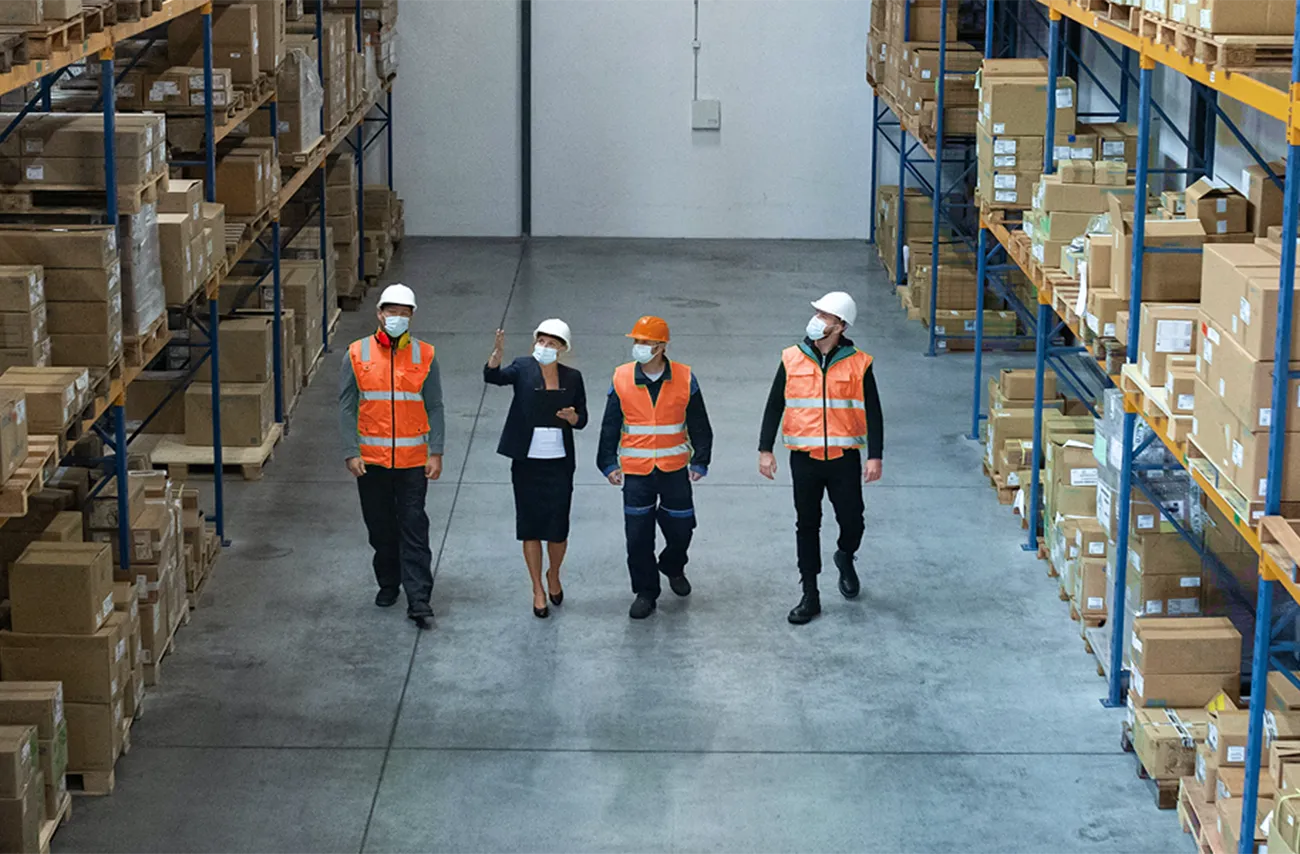
Every system we supply to Los Angeles is engineered to meet California Building Code seismic requirements, among the most demanding in the country. Our inspections cover the five critical failure points: columns, anchor plates, struts, beams, and frames. Every section gets tagged Green (no restrictions), Yellow (monitor, do not overload), or Red (replace immediately). You get a full documented findings report, not a verbal summary. Work continues during inspection, with no operational downtime.
Possible Coverage
Remote Design + On-Site Install
Product Delivery
From 3–5 Days
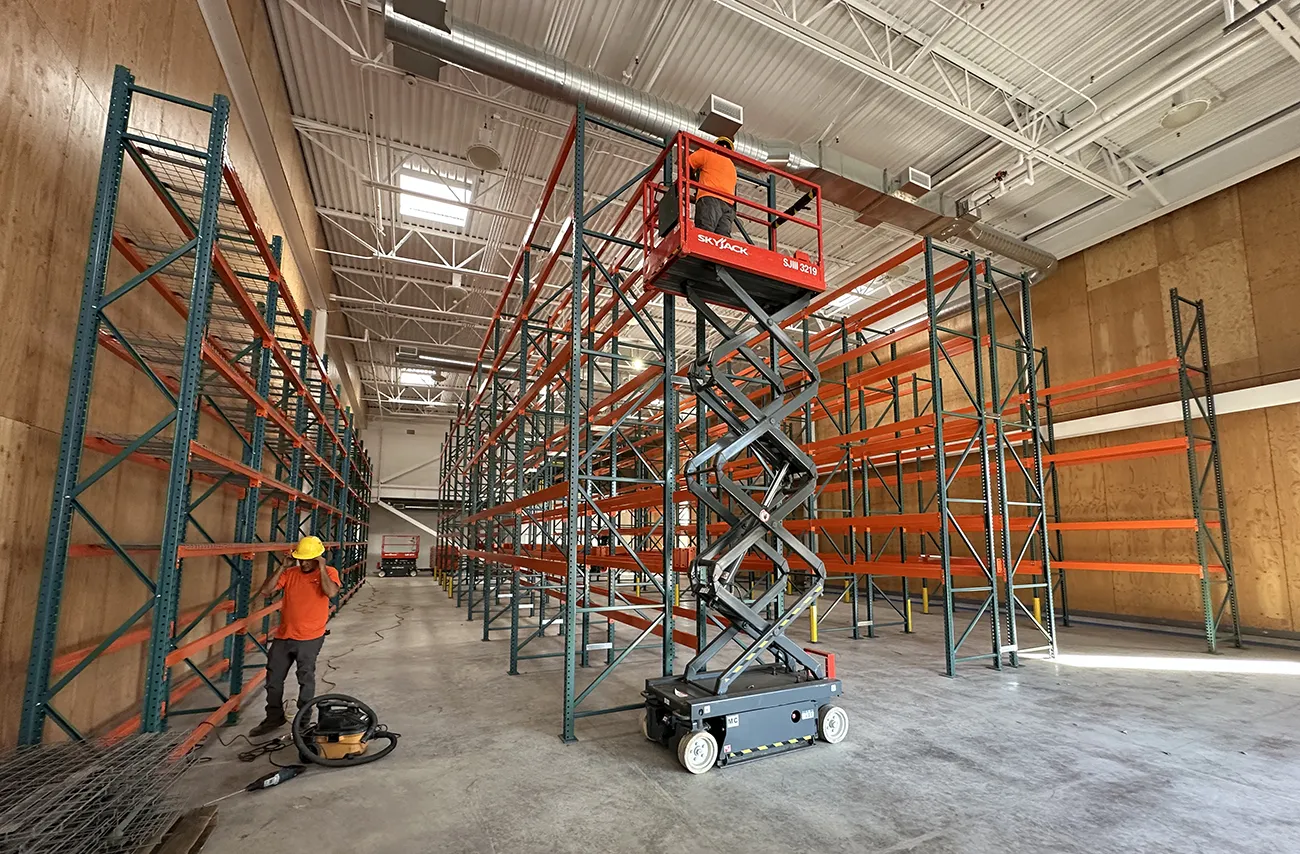
Our crews handle the full installation, delivery, staging, anchor drilling, plumb, level, labeling, and load testing before leaving your site. Here’s what that looks like in sequence: we audit your order before steel ships, coordinate delivery around your dock schedule, install without shutting down operations, and sign off with your team before we leave. We coordinate directly with your GC, fire marshal, and forklift dealer. You’re not on three calls at once; we are.
Local Authority
LADBS + LA Fire Department
Our Goal
First-Pass Approval
We prepare the full permit package, stamped engineering drawings, rack elevations, and commodity classification per NFPA 13, so your high-piled storage permit clears the LA Department of Building and Safety and the Los Angeles Fire Department on the first review. If your sprinkler designer or fire marshal needs us on the call, we’re on the call.
Shop Our Products




Discover
300+
products

Requirements and Regulations Specific to Racking in Los Angeles, CA
Are Racking Permits Required in Los Angeles, CA?
Key Requirements
-
A building permit is required for pallet racking installations in Los Angeles. The permit confirms your racking system meets local building codes, structural integrity, seismic anchorage, and load capacity. LADBS handles structural submittals, we prepare the full package including stamped engineering drawings and rack elevations.
-
Los Angeles sits across multiple active fault systems, including the San Andreas, Puente Hills, and Hollywood faults. Most commercial and industrial facilities fall under Seismic Design Category D or E per ASCE 7-16, among the highest in the country. Every system we supply is engineered and anchored to CBC 2022 seismic requirements with full stamped documentation.
-
Anything stored above 6 feet in a footprint exceeding 500 square feet triggers a high-piled combustible storage permit from the Los Angeles Fire Department (California Fire Code Section 3206). This is the most common fire-related permit for warehouse racking in LA, and the LAFD review is rigorous. We coordinate directly with your sprinkler designer and prepare the full commodity classification per NFPA 13.
-
Every rack we install gets a capacity label rated to the actual configuration, not a generic spec sheet. The label tells your team and the inspector exactly what each level can hold, required for LADBS sign-off and LAFD high-piled storage review.
-
OSHA Section 5(a)(1) requires employers to provide a workplace free from recognized hazards. Pallet rack violations are among the most common citations in California warehouses. We build a maintenance handoff into every project, so your team knows what to watch for between formal inspections.
-
Before any steel ships, our team audits your order against your site dimensions, forklift class, and pallet specs. We’ve caught customer errors worth $1,000+ before they left our yard, and we document everything so your receiving team knows exactly what to expect at the dock.
-
Los Angeles industrial and manufacturing zones (M1, M2, M3) and unincorporated LA County zones generally permit warehouse racking without variance. Installations that change a building’s occupancy classification or exceed thresholds under the California Fire Code may trigger additional review. We flag these early so they don’t surprise you at permit submission.
Turnkey Pallet Racking Solutions & Services

Turnkey Pallet Racking Solutions & Services
Buying the racking is the easy part. Installing it inside an active Inland Empire fulfillment center, a Vernon food distribution facility, or a Port of Long Beach transload operation is where projects go sideways.
Our crews handle the full installation, delivery, staging, anchor drilling, plumb, level, labeling, and load testing, while keeping your forklifts moving. We sequence work around your shifts and your dock schedule. We coordinate directly with your GC, fire marshal, and forklift dealer. And we don’t leave the site until the system is signed off and your team knows how to inspect it going forward.
Industries We Serve in Los Angeles
No matter your industry or project size, from a single-bay expansion to a full warehouse build, Speedrack West has the system and the engineering for it. Here are the industries we most commonly serve across the LA Basin and Inland Empire:
E-commerce, Retail Logistics & 3PLs
Port of LA & Intermodal Distribution
Food & Beverage and Industrial Manufacturing
Entertainment & Production Warehousing
Apparel & Fashion Distribution
We are Los Angeles’s largest pallet rack and material-handling distributor!
What Pallet Rack type is right for you?
In Los Angeles, CA, the right racking system depends on your industry, throughput, and facility layout. Here are the types most commonly used across the LA Basin, from Port of LA transloaders to Inland Empire fulfillment centers to Vernon food distributors and South Bay manufacturers. If you’re not sure which fits, that’s the conversation we want to have first.
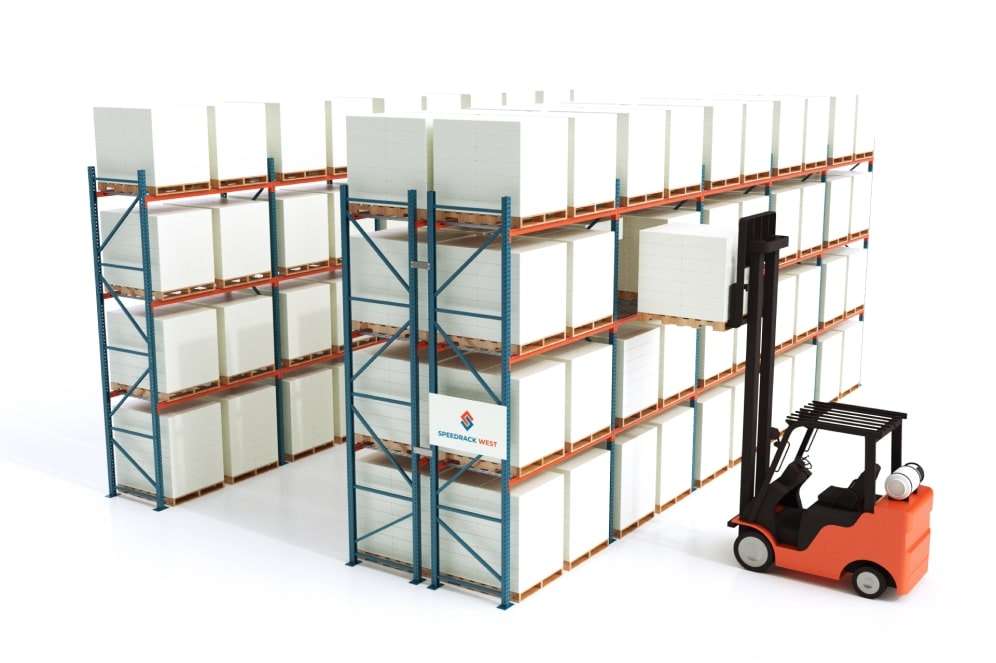
Selective Pallet Racks
The most common type of pallet racking system. It provides direct access to each pallet, making it suitable for warehouses with a wide variety of products.
Advantages
Flexibility, ease of access, and compatibility with most types of forklifts.
Compliance
Must meet structural and seismic requirements as outlined in the local building codes and ASCE 7 standards.
Advantages
Flexibility, ease of access, and compatibility with most types of forklifts.
Compliance
Must meet structural and seismic requirements as outlined in the local building codes and ASCE 7 standards.

Drive-In/Drive-Through Racks
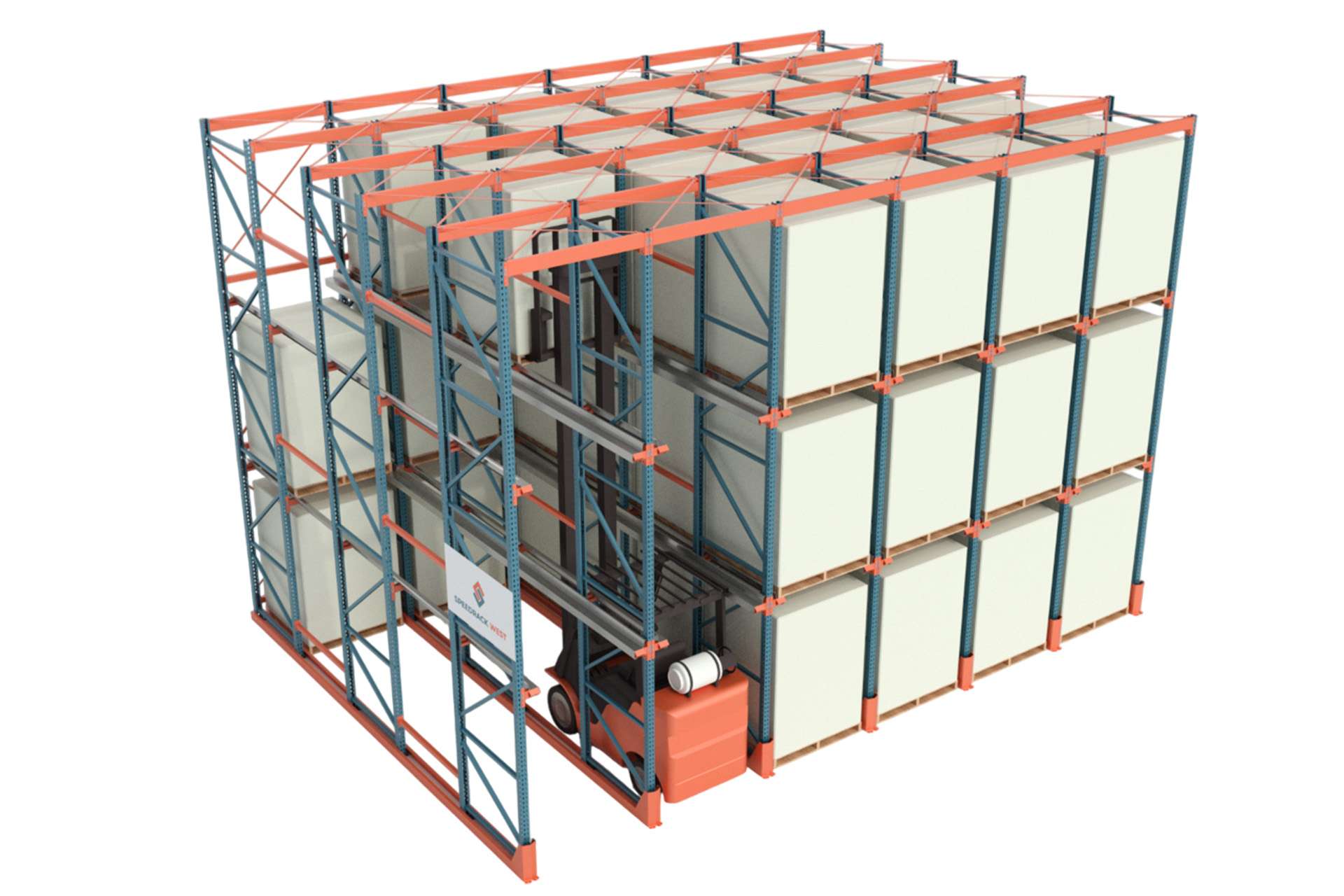
Designed for high-density storage, allowing forklifts to drive directly into the rack to place or retrieve pallets. Drive-In racks have one entry and exit point, while Drive-Through racks have entry and exit points on both sides.
Advantages
Maximizes storage space by reducing aisle space.
Compliance
Requires careful design and anchorage to meet safety standards, especially in seismic zones.
Advantages
Maximizes storage space by reducing aisle space.
Compliance
Requires careful design and anchorage to meet safety standards, especially in seismic zones.

Push-Back Racks
A high-density storage system where pallets are loaded from the front and pushed back on inclined rails. When a pallet is removed, the next pallet automatically moves forward.
Advantages
Increases storage density while providing better access to products compared to drive-in racks.
Compliance
Needs to adhere to local structural requirements and periodic inspections for safety.
Advantages
Increases storage density while providing better access to products compared to drive-in racks.
Compliance
Needs to adhere to local structural requirements and periodic inspections for safety.

Pallet Flow Racks
Utilizes gravity flow lanes to move pallets from the loading side to the picking side. Ideal for first-in, first-out (FIFO) inventory management.
Advantages
Efficient for warehouses with high turnover rates and expiration-sensitive products.
Compliance
Requires detailed structural analysis and compliance with seismic bracing standards.
Advantages
Efficient for warehouses with high turnover rates and expiration-sensitive products.
Compliance
Requires detailed structural analysis and compliance with seismic bracing standards.
Designing Your Pallet Rack
Try our Pallet Rack Builder to design your system and get instant final pricing upon checkout.
Try Pallet Rack BuilderWhat types of pallet racking work best for LA warehouses?
Start with how your inventory moves, not what the racking looks like. Fast-moving, high-variety SKUs point to selective pallet racking, every pallet is a pick face. Date-sensitive or batch inventory points to FIFO pallet flow rack, which rotates stock automatically. High-density single-SKU storage points to drive-in or drive-through racking. If floor space is the bottleneck, and in the LA Basin and Inland Empire, every square foot has a cost, narrow-aisle selective or push-back packs more positions into the same footprint. Most facilities run two or three types side by side. Send us your SKU profile and pallet dimensions and we’ll spec the right mix.
Do I need a permit to install pallet racking in Los Angeles?
Yes. Pallet racking permits are required in Los Angeles, and the requirements are among the most rigorous in the country. For any high-piled combustible storage exceeding 500 square feet or stored above 6 feet, the Los Angeles Fire Department requires a separate high-piled storage permit in addition to a structural building permit from LADBS. We prepare and submit the full package, stamped engineering drawings, rack elevations, and commodity classification per NFPA 13, with first-pass approval as the goal.
What is the difference between drive-in and drive-through racking?
Both are high-density systems where forklifts enter the rack bay to load and retrieve pallets. The difference is flow direction. Drive-in racking has one entry point, the forklift enters and exits from the same aisle, making it a last-in, first-out (LIFO) system. Drive-through racking has entry on one side and exit on the other, creating a first-in, first-out (FIFO) flow. Drive-in is common for bulk single-SKU storage where rotation doesn’t matter. Drive-through is the right call when date sensitivity or stock rotation does matter, import freight, food, and beverage are typical applications at the Port of LA and in Vernon.
How much does pallet rack installation cost in Los Angeles?
It depends on system type, square footage, seismic engineering requirements, and whether permits are included. A basic selective rack installation is priced differently from a full drive-in or pallet flow system with LADBS submittals and LAFD high-piled storage permitting. The fastest path to an accurate number is a layout review. We audit your dimensions, pallet specs, and forklift class, then give you a custom quote with engineering input, usually within 24 hours. No obligation.
Do you provide pallet racking services in other cities near Los Angeles?
Yes, we serve businesses throughout Southern and Northern California, including Oxnard, San Jose, San Francisco, and Sacramento. If your facility is in a city not listed, reach out, and we’ll confirm coverage and lead times for your location.






Irving Nieves says: “It's been an easy process working with the Speedrack West team, even with the changes partway through.”


Scott Misso says: “Everything works as expected. Designed as it should be. Good job!”


Kyle Gersman says: “I called Bill multiple times a day and he always picked up and was always very helpful. What I really liked is that they pointed out a lot of questions and processes that I didn't even have on my radar going into the move. It helped me expand the scope to an appropriate size of what I needed to consider as we made the transition to a bigger facility.”


Robert Baumgartner says: “Despite picking up this project in the middle of its lifecycle, the transition was flawless thanks to the team’s stellar communication. They exceeded our expectations by delivering the installation earlier than anticipated and hitting every technical requirement. From the sales team’s quick answers to their willingness to make adjustments, the experience was top-tier.”


Consolidated Supply says: “We’re very happy to be your regular client, and it’s always so easy to work with your team”


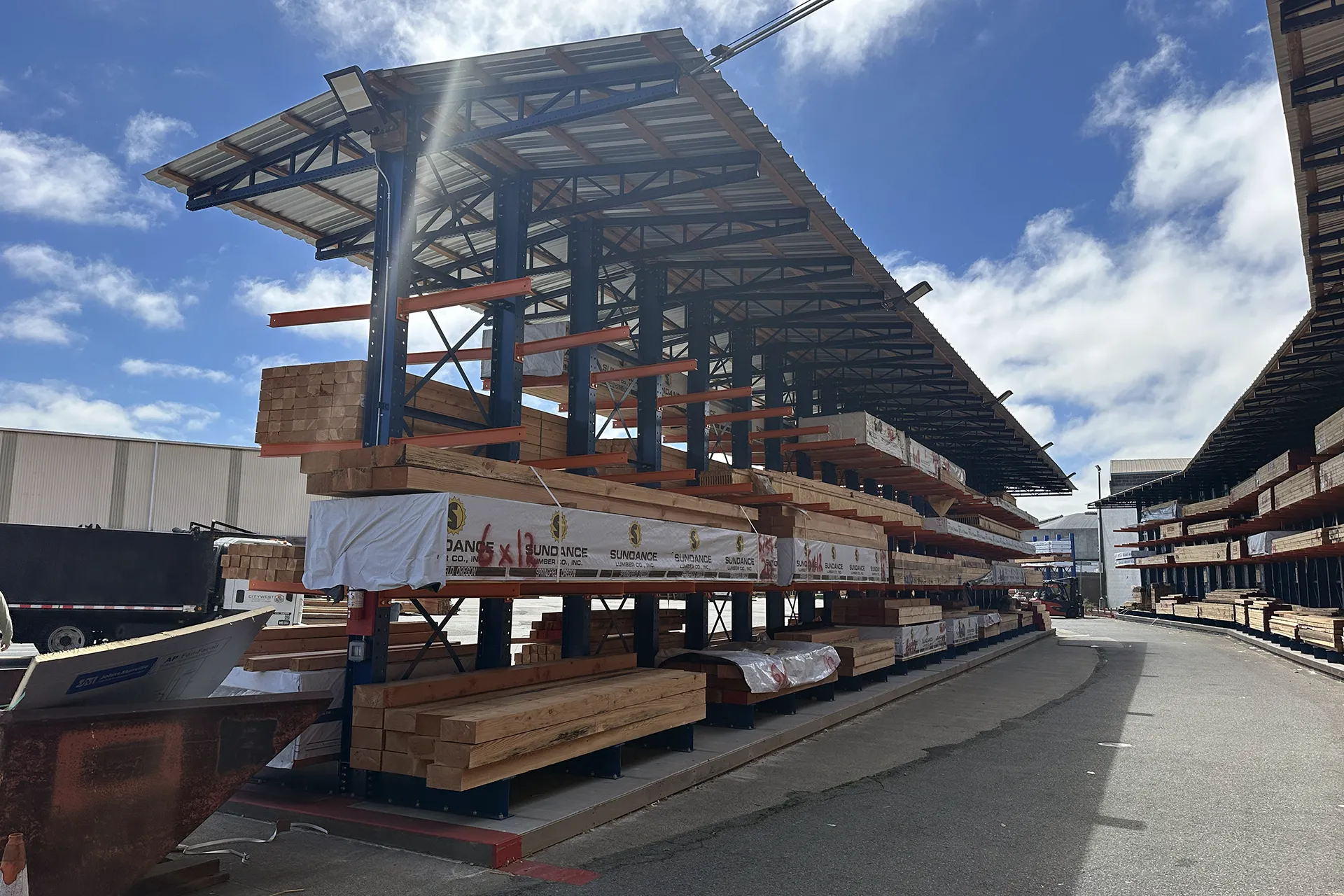
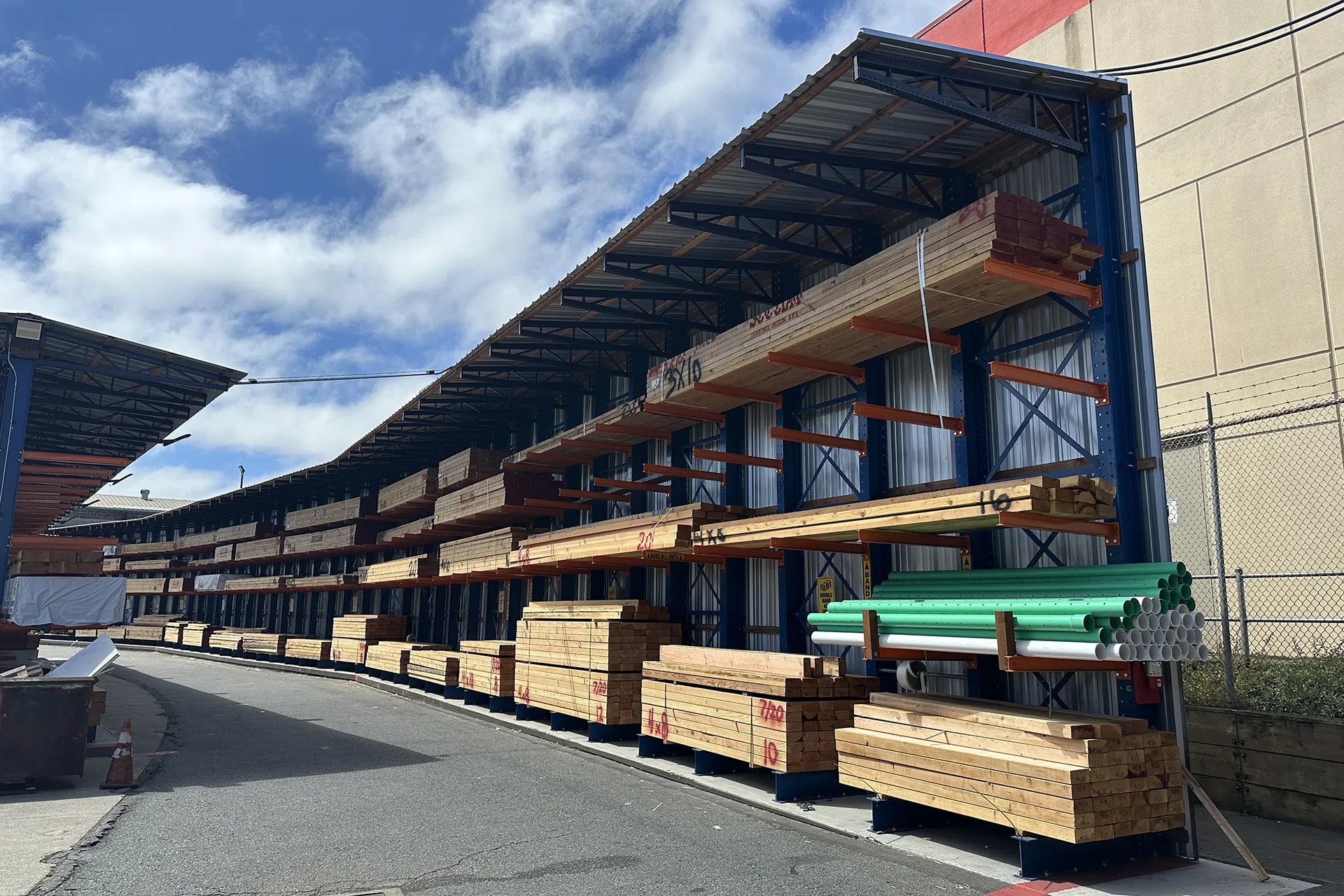
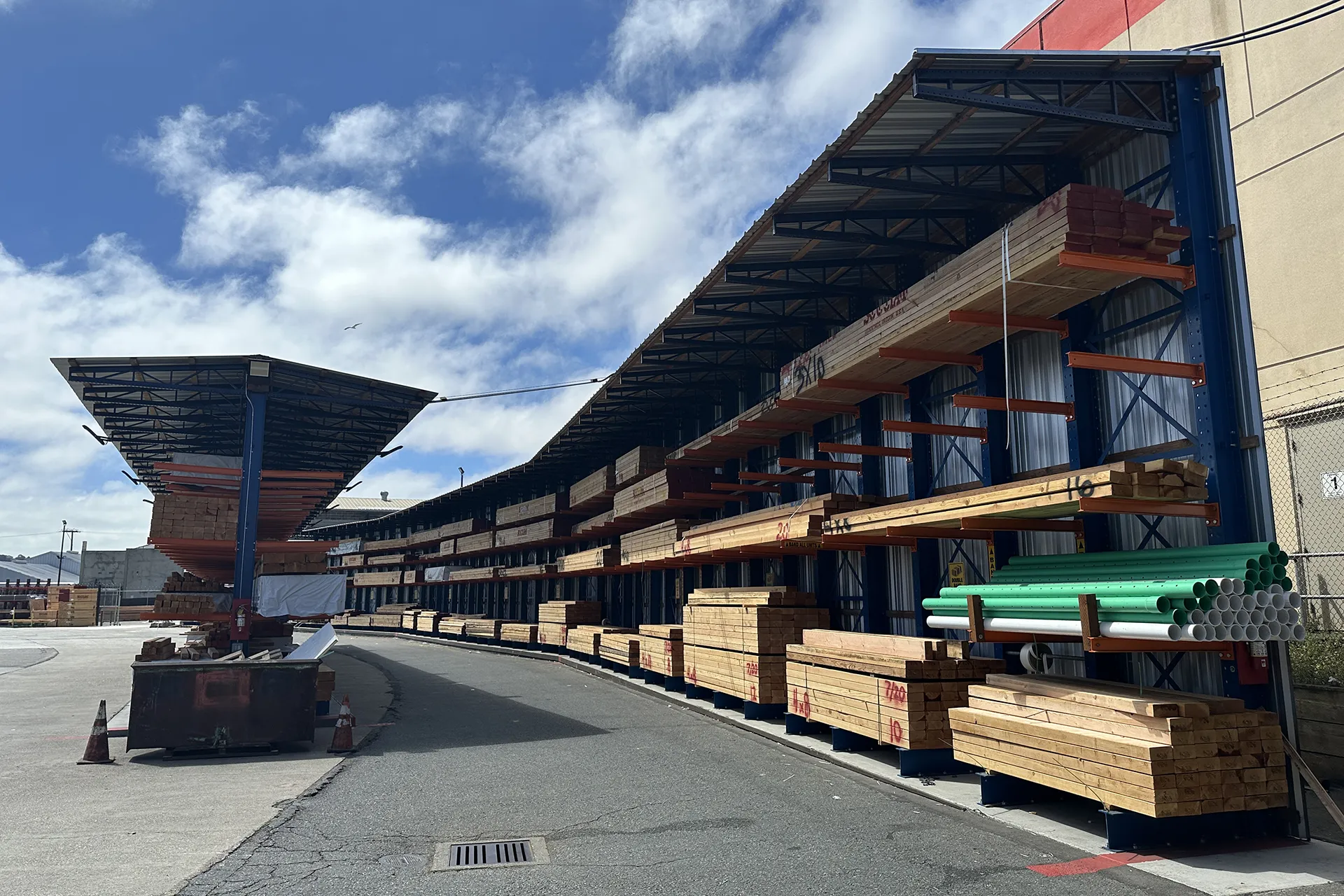
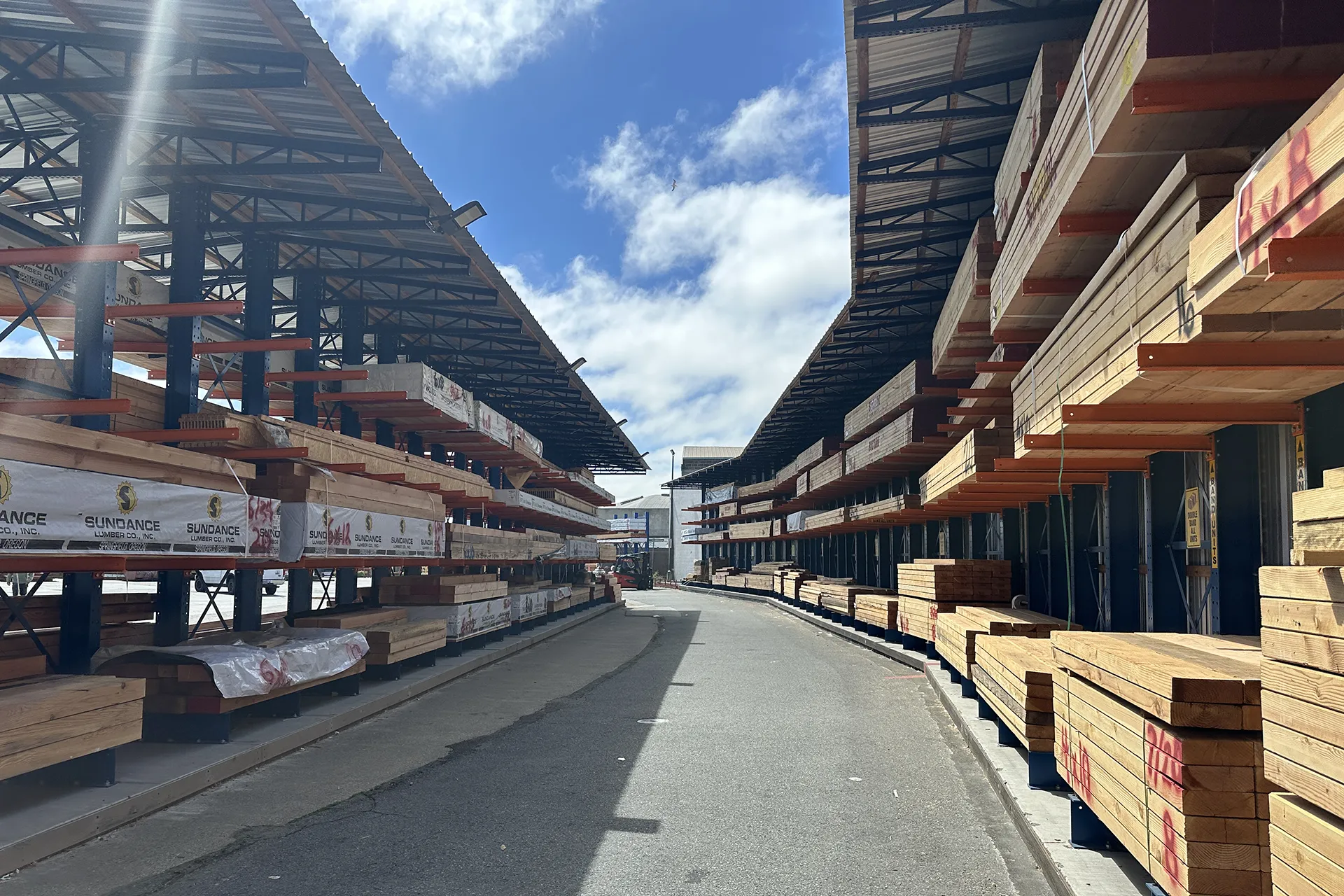
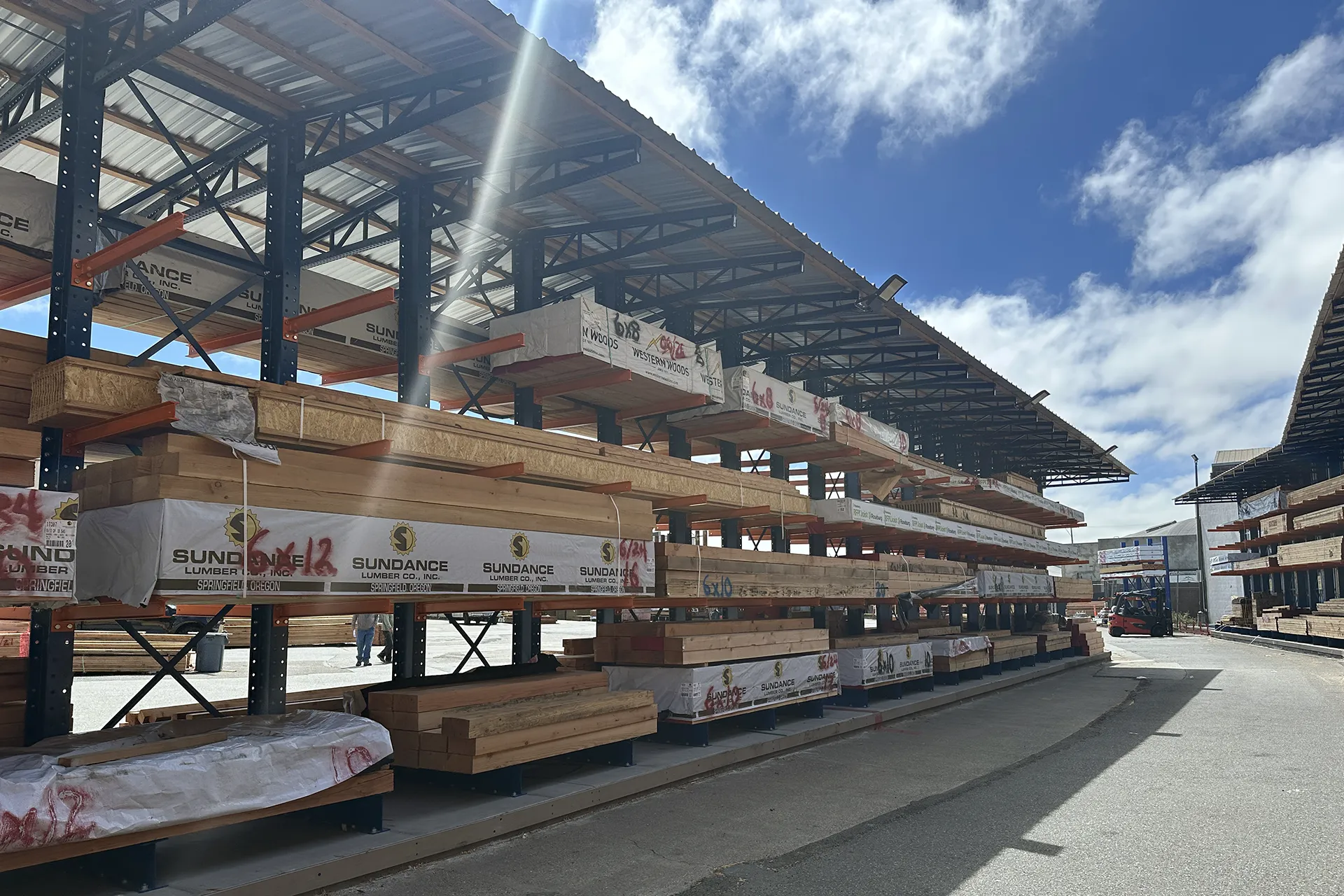
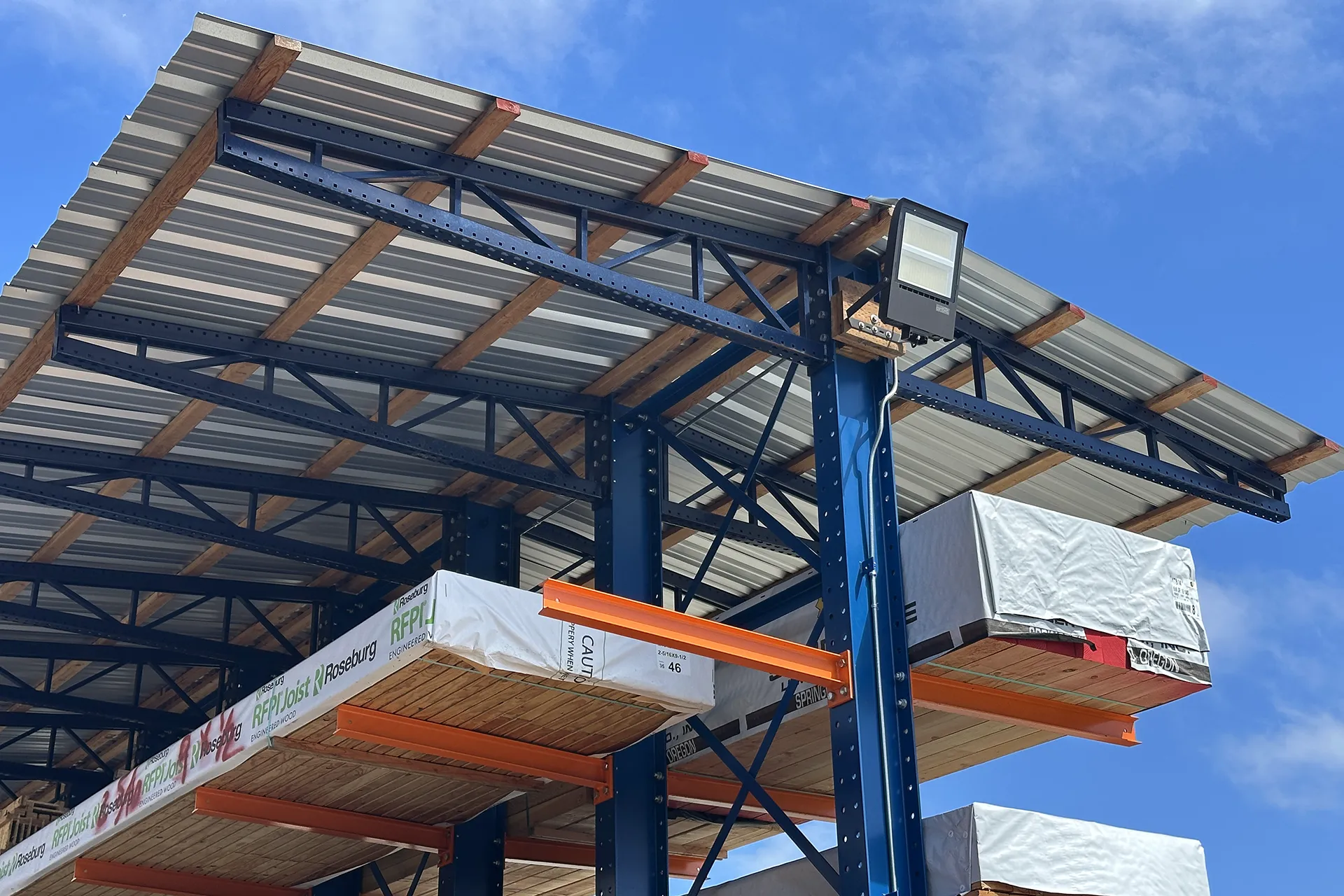
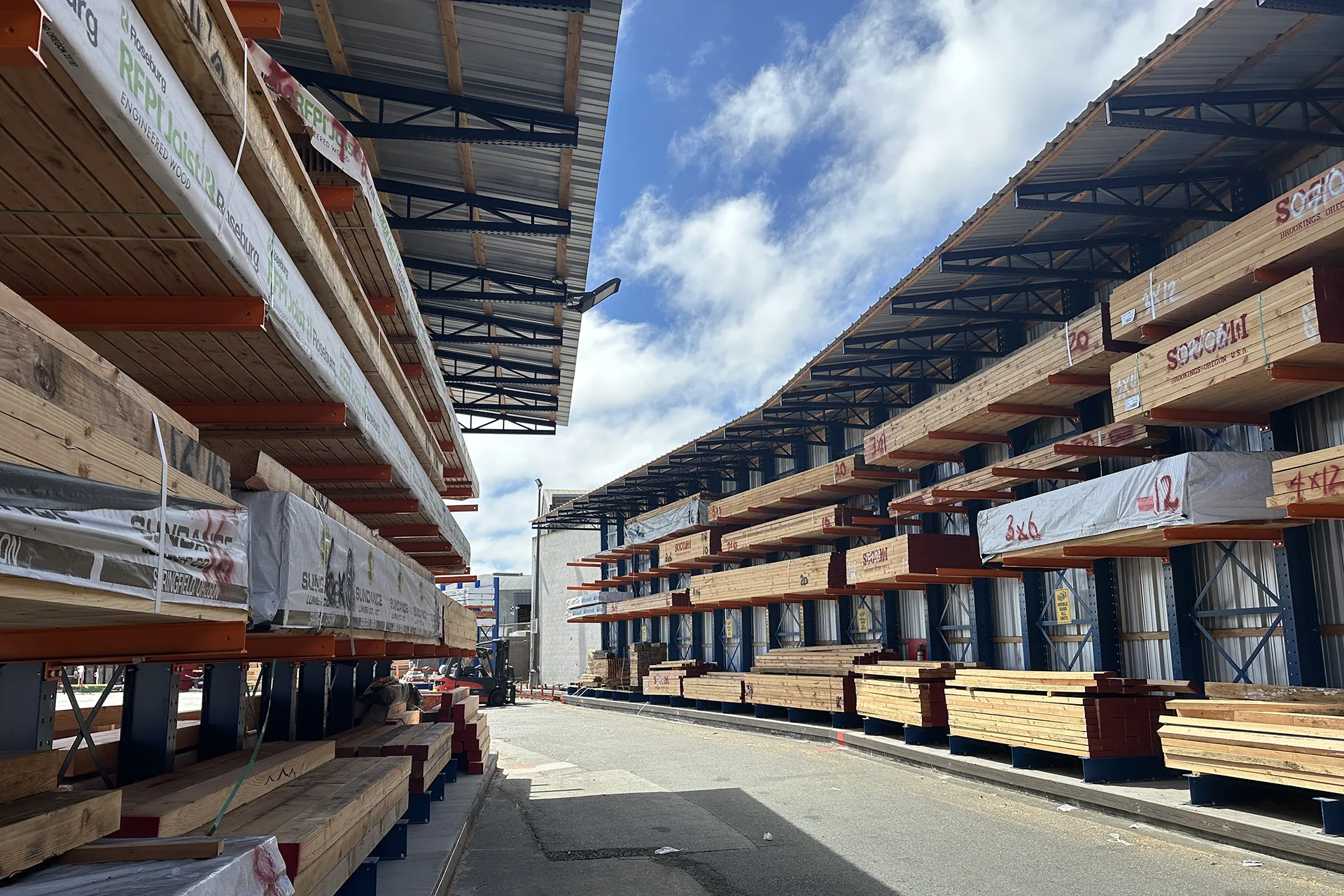
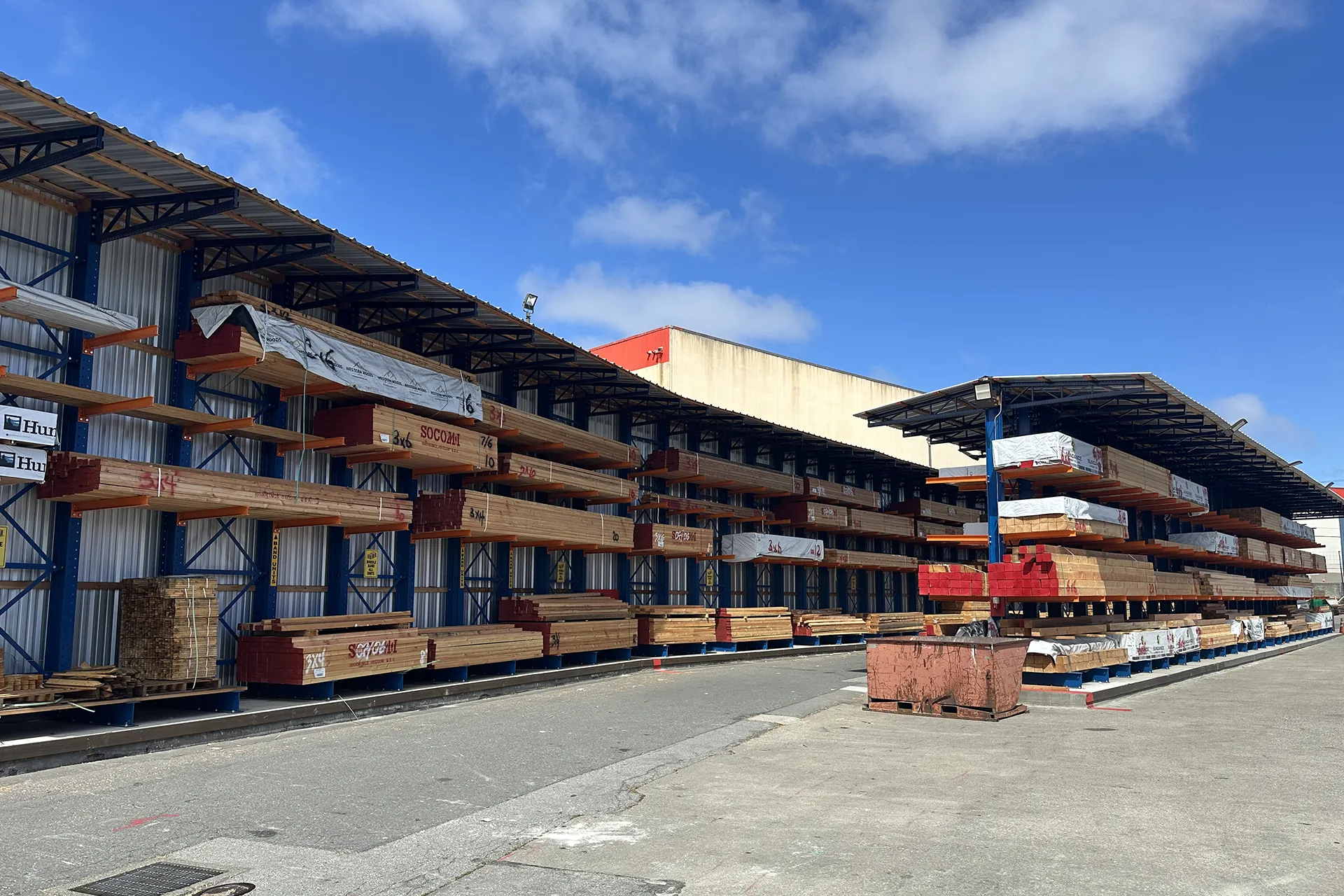
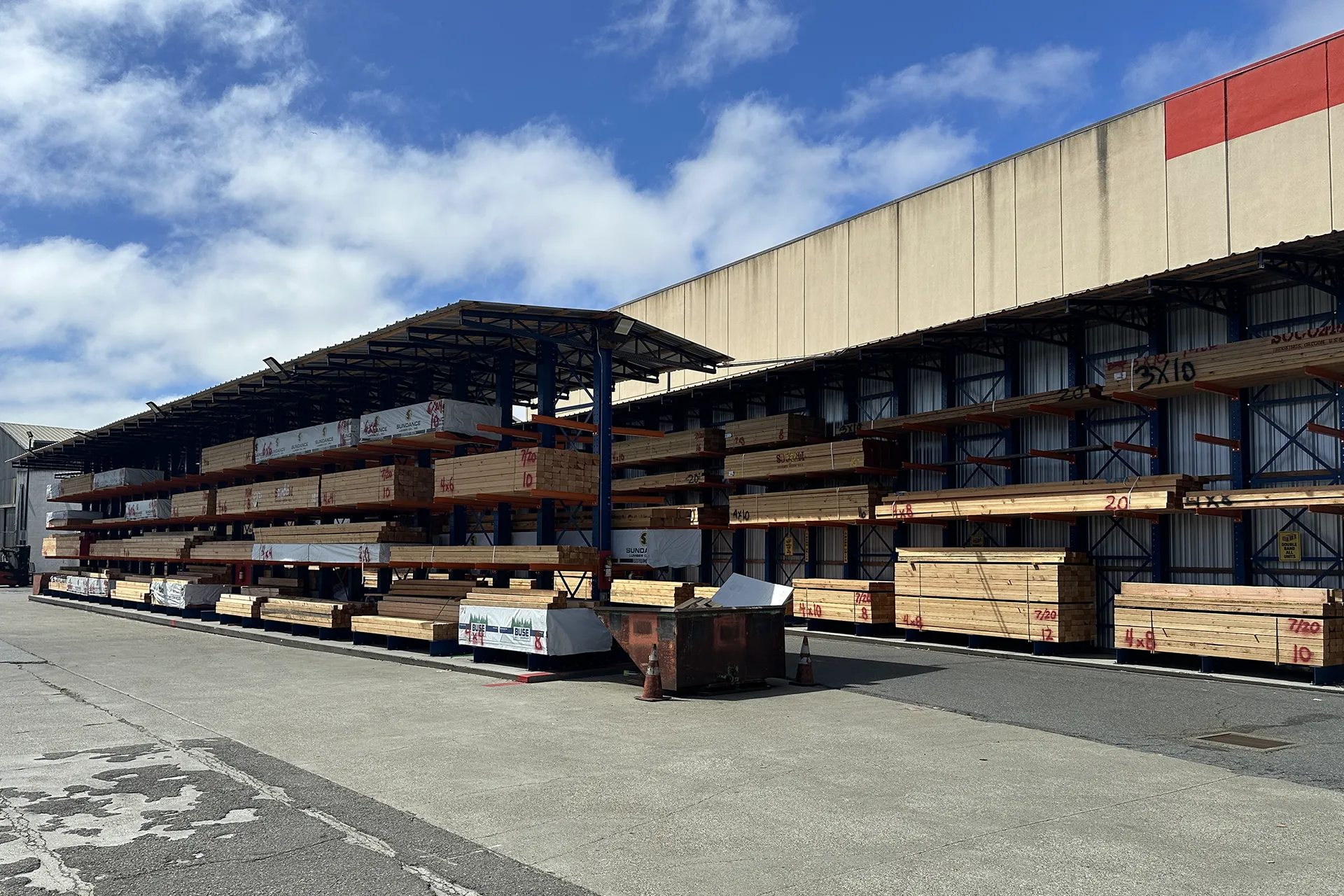
Lumber Company says: “Working with Speedrack West team has been a real pleasure. They made the whole process smooth and straightforward, and we’re 100% planning to come back again—which we actually just did recently.”


Derek Patterson says: “I would suggest that there should be no hesitation…from placing an order to getting everything delivered in such a timely manner. I had racking within 7 days compared to 4 to 6 weeks elsewhere. The customer service level is fabulous.”
Need Warehouse Help in Los Angeles? Let’s Talk.